Quick Answer
Nepalese Buddhism is not simply another name for Tibetan Buddhism. In the Kathmandu Valley, Newar Buddhism developed a distinctive Vajrayana tradition with hereditary Vajracharya priests, household ritual practice, monasteries, sacred art, metalwork, manuscripts, and elaborate ceremonial objects.
Newar Buddhism in the Kathmandu Valley
Newar Buddhism is a living Buddhist tradition centered historically in the Kathmandu Valley. Ritual, community life, family shrines, monastic institutions, sacred images, and Vajrayana practice remain deeply connected. The Rubin Museum’s Project Himalayan Art describes household shrines as active spaces for worship, offerings, and ritual, and documents the continued role of Vajracharya priests in Newar Buddhist communities.
Vajracharya: Ritual Masters
In Newar Buddhism, Vajracharya refers to a hereditary community of Buddhist ritual specialists who perform Vajrayana ceremonies for devotees. Their ritual crowns, vajra scepters, bells, and other implements are not decorative accessories; they belong to a sophisticated ritual system with specific meanings and uses.
Vajra & Bell
The vajra is one of the most recognizable ritual implements in Vajrayana Buddhism. In ritual use it is commonly paired with a bell. The vajra is associated with method or compassionate action, while the bell symbolizes wisdom. Their union expresses two essential aspects of the Buddhist path.
Sacred Art & Metalwork
Nepalese Newar artists have long been known for highly refined metalwork, painting, ritual crowns, jewelry, and sacred objects. The visual language of Nepalese Buddhist art has influenced the wider Himalayan world while retaining its own distinctive forms and iconography.
Amulet Boxes & Portable Devotion
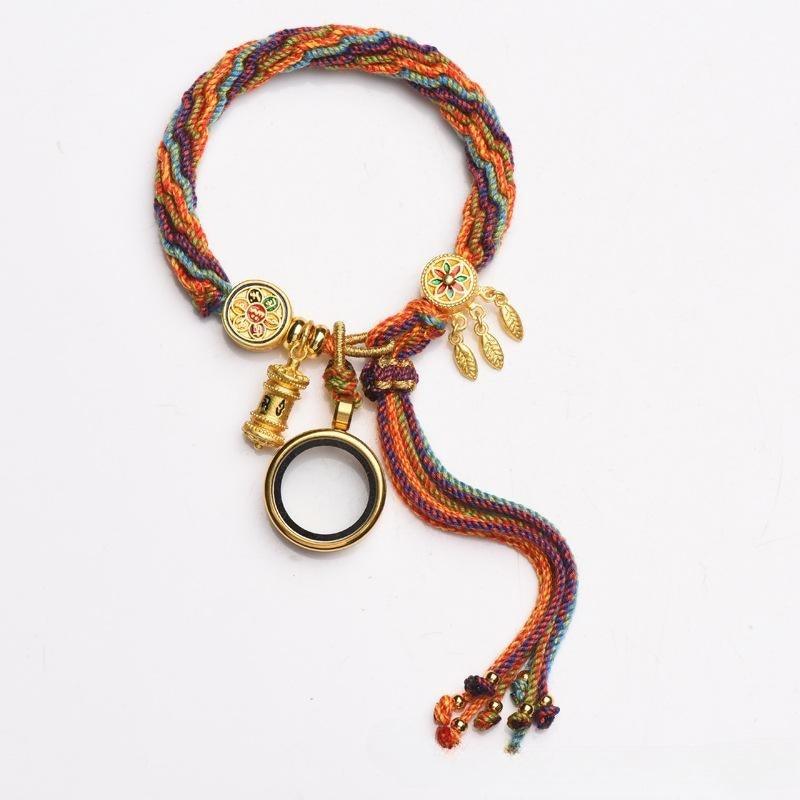
Gau or amulet boxes appear across Himalayan Buddhist cultures and can contain sacred images, prayers, diagrams, relic materials, or other devotional contents. Modern jewelry inspired by gau forms carries forward the idea of a sacred object kept close to the body.
Prayer, Merit & Everyday Practice
Like Tibetan Buddhism, Nepalese Vajrayana places great importance on ritual, mantra, offerings, merit, and devotional practice. But the social institutions, priestly roles, art styles, and household traditions of Newar Buddhism have their own history and should be understood on their own terms.
What About Singing Bowls?
Singing bowls are widely sold in Nepal today and are commonly used in meditation, sound practice, and contemporary ritual-inspired settings. We present them as meditation and sound-practice objects rather than reducing Nepalese Buddhist culture to a single commercial object. The deeper tradition includes monasteries, household shrines, Vajrayana ritual, sacred art, mantra, offerings, and community practice.
Explore Nepalese & Himalayan-Inspired Pieces
Browse our Singing Bowls, Mala Beads, and Meditation & Mindful Practice collection.
Cultural References