Quick answer: Om Mani Padme Hum is the six-syllable mantra associated with Avalokiteshvara (Chenrezig), the bodhisattva of compassion in Tibetan Buddhism. It is commonly recited as a practice connected with compassion, bodhichitta, wisdom, and the Buddhist path. Its meaning is richer than a simple word-for-word English translation.
In a 2019 Avalokiteshvara empowerment, His Holiness the Dalai Lama explained the mantra through the relationship between method and wisdom: mani (“jewel”) represents method or the awakening mind of bodhichitta, padme (“lotus”) represents wisdom and insight into emptiness, and hum represents their inseparable union. His explanation also connects om with body, speech, and mind. See the Dalai Lama’s explanation of Om Mani Padme Hum.
What Does Om Mani Padme Hum Mean?
There is no single short English sentence that captures the full Buddhist meaning of Om Mani Padme Hum. The mantra belongs to a living religious tradition, and explanations often focus on how compassion, bodhichitta, wisdom, and transformation work together in practice.
-
Om: in the Dalai Lama’s explanation, the syllable is connected with body, speech, and mind.
-
Mani: literally “jewel”; it represents method, especially the awakening mind of bodhichitta.
-
Padme: “lotus”; it represents wisdom, particularly insight into emptiness.
-
Hum: represents the inseparable union of method and wisdom.
This is why reducing the mantra to the familiar phrase “the jewel in the lotus” can be incomplete. That phrase reflects part of the vocabulary, but it does not communicate the full doctrinal explanation given within Tibetan Buddhist teaching.
Is Om Mani Padme Hum a Six-Word Mantra?
English searches sometimes call it the “six-word mantra,” but six-syllable mantra is the more precise description. The six syllables are commonly separated as Om Ma Ni Pad Me Hum. They are not six independent English words with six simple dictionary definitions.
The phrase is also widely called the mantra of Avalokiteshvara or Chenrezig. During a 2023 Avalokiteshvara empowerment in Ladakh, the Dalai Lama referred to Om Mani Padme Hum as the six-syllable mantra and described Avalokiteshvara as the embodiment of compassion.
Who Is Avalokiteshvara or Chenrezig?
Avalokiteshvara, known as Chenrezig in Tibetan, is the bodhisattva associated with compassion. This relationship is central to understanding the mantra. The Dalai Lama has repeatedly connected recitation of the six-syllable mantra with cultivating compassion rather than treating it as a phrase for obtaining a guaranteed material result.
For that reason, a useful way to approach the mantra is not “What will these words give me?” but “What qualities does this practice ask me to cultivate?” Compassion, concern for others, bodhichitta, and wisdom are more faithful starting points.
Does Om Mani Padme Hum Literally Mean “The Jewel in the Lotus”?
You will often see Om Mani Padme Hum translated as “the jewel in the lotus.” That rendering is memorable, but it can make the mantra sound like an ordinary sentence. Traditional explanations are more layered.
In the Dalai Lama’s explanation, mani and padme are not only dictionary terms. The jewel points to method and bodhichitta; the lotus points to wisdom and insight into emptiness; and hum expresses their inseparability. So “jewel in the lotus” can be a shorthand, but it should not replace the broader Buddhist context.
How Is Om Mani Padme Hum Practiced?
Recitation can be spoken aloud, whispered, or practiced silently depending on the practitioner and context. A simple personal practice may involve settling the attention, recalling compassion, and repeating the mantra at a steady pace. Formal practice instructions can vary by teacher and lineage, so students following a specific Buddhist practice should use the instructions they were given.
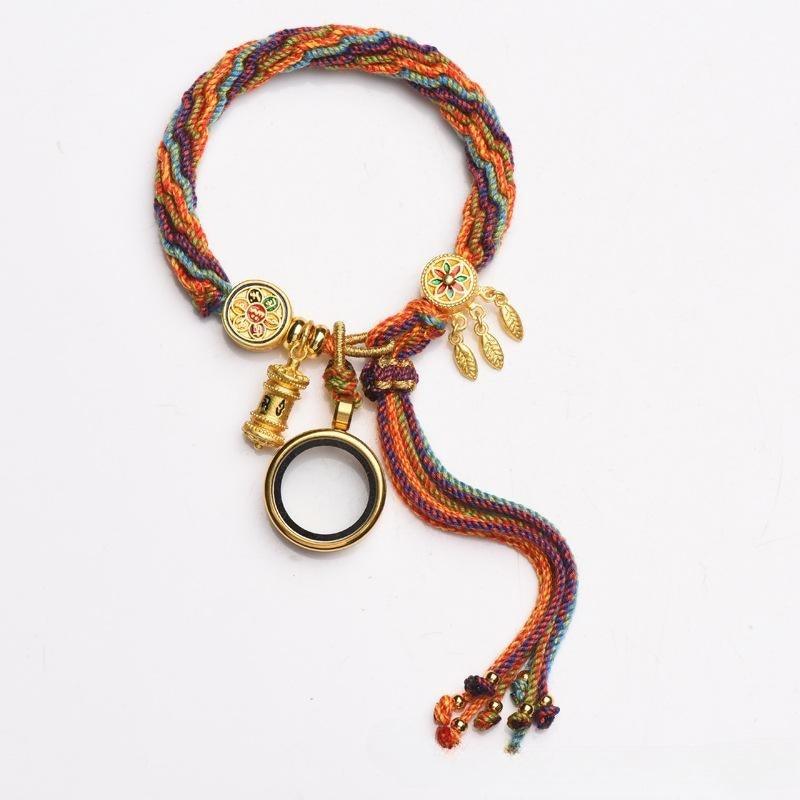
The mantra also appears in prayer wheels, carved mani stones, inscriptions, ritual objects, and devotional art across Tibetan and Himalayan Buddhist cultures. These are not merely decorative uses; they place the mantra within a broader culture of prayer and remembrance.
How Do You Use Mala Beads With Om Mani Padme Hum?
A mala can provide a tactile way to count recitations. A common method is to move one bead for each full recitation of Om Mani Padme Hum. A full mala commonly contains 108 beads, while wrist malas and counters may contain fewer.
The exact handling of the guru bead, counting direction, and other details can vary by tradition or teacher. If you received formal instructions, follow those rather than assuming that one internet rule applies to every lineage.
For a broader introduction to bead count and meditation use, read What Are Mala Beads? 108 Beads, Meaning & Meditation, or explore our Buddhist mala and prayer beads.
Why Does the Mantra Appear on Jewelry?
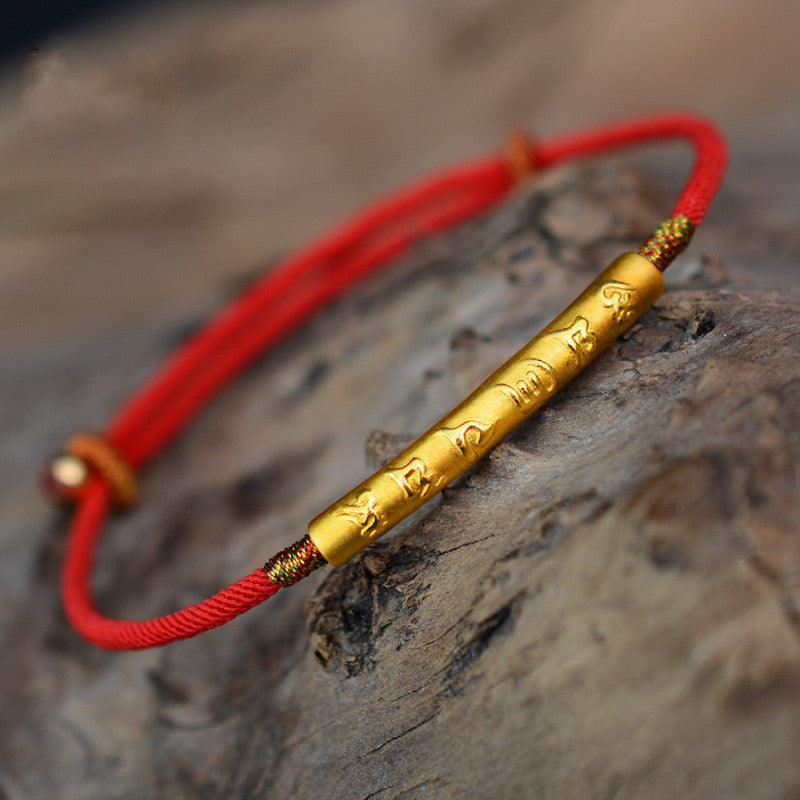
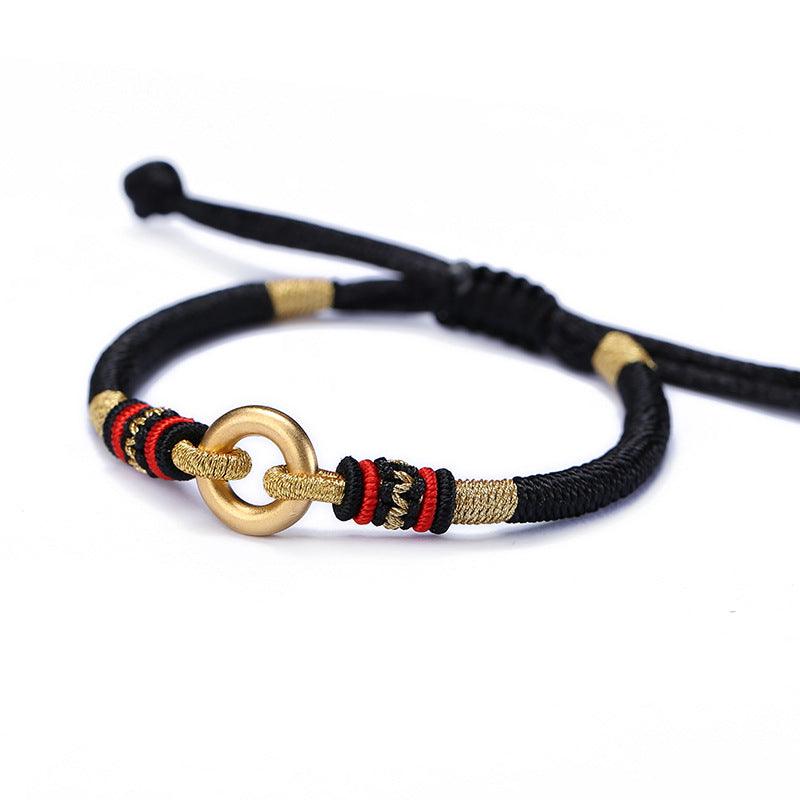
Om Mani Padme Hum appears on bracelets, pendants, rings, prayer wheels, and other objects because an inscription can serve as a visible reminder of compassion, prayer, and Buddhist practice. The meaning comes from the mantra and the tradition it refers to, not from a promise that a piece of jewelry will automatically produce a specific outcome.
When protection or blessing language is used, it is more accurate to understand it in its religious and cultural context rather than as a guaranteed physical, financial, or medical effect.
If you are looking for a wearable mantra design, see our Om Mani Padme Hum red string bracelet. You can also browse the wider Buddhist red string bracelet collection.
Om Mani Padme Hum and Red String Bracelets
A red string bracelet and an Om Mani Padme Hum inscription can carry related but distinct layers of meaning. The red cord may be associated with blessing, protection symbolism, prayer, or mindful intention in particular Buddhist and Tibetan contexts, while the mantra specifically points toward Avalokiteshvara and compassion.
For the cultural context of the cord itself, see our guide to red string bracelet meaning. Keeping these meanings separate helps avoid treating every Tibetan-inspired bracelet as if it has the same ritual origin.
Can Anyone Recite Om Mani Padme Hum?
The mantra is widely recited and publicly taught, but respectful practice still matters. A beginner can start by learning its association with Avalokiteshvara and compassion rather than treating the sounds as a magical formula. If you are undertaking a formal tantric or lineage-specific practice, follow the guidance of a qualified teacher or established Buddhist community.
How Should Mantra Jewelry and Mala Beads Be Treated?
If an object carries a Buddhist mantra, many practitioners prefer to handle it thoughtfully rather than as a novelty. Keep malas and cords clean and dry when their materials require it, avoid unnecessary strain on bead cords, and store them carefully when not in use.
Respect also means representing the mantra accurately: avoid claiming that a mantra bracelet guarantees wealth, prevents illness, or produces a fixed result. Its religious significance is better understood through compassion, prayer, blessing, wisdom, and practice.
Om Mani Padme Hum Meaning: Key Points
-
Om Mani Padme Hum is the six-syllable mantra associated with Avalokiteshvara (Chenrezig).
- Compassion is central to its Tibetan Buddhist context.
-
Mani (“jewel”) is explained as method or bodhichitta.
-
Padme (“lotus”) is explained as wisdom, especially insight into emptiness.
-
Hum represents the inseparability of method and wisdom.
- “The jewel in the lotus” is a familiar shorthand, not a complete explanation of the mantra.
- Mala beads can be used to count recitations, but detailed practice instructions can vary by lineage and teacher.
- Jewelry bearing the mantra can serve as a reminder of compassion and practice; it should not be presented as guaranteeing material or medical outcomes.
FAQ
What does Om Mani Padme Hum mean in English?
There is no single complete English sentence equivalent. A common shorthand is “the jewel in the lotus,” but Tibetan Buddhist explanations go further: mani represents method or bodhichitta, padme represents wisdom, and hum their inseparable union.
What is the six-word mantra?
The phrase people often mean is Om Mani Padme Hum. “Six-syllable mantra” is more precise than “six-word mantra,” with the syllables commonly written as Om Ma Ni Pad Me Hum.
Who is Om Mani Padme Hum associated with?
It is associated with Avalokiteshvara, called Chenrezig in Tibetan, the bodhisattva of compassion.
What is the purpose of chanting Om Mani Padme Hum?
Within Tibetan Buddhist teaching, recitation is connected with compassion, bodhichitta, wisdom, prayer, and spiritual practice. It should not be reduced to a guaranteed worldly benefit.
Can you count Om Mani Padme Hum on a mala?
Yes. A practitioner can use one bead for each complete recitation. Full malas commonly contain 108 beads, although smaller wrist malas and counters also exist.
Is Om Mani Padme Hum a protection mantra?
It can appear in devotional and protection-related contexts, but its core association is with Avalokiteshvara and compassion. “Protection” is best presented as religious and spiritual symbolism rather than as a guaranteed physical effect.