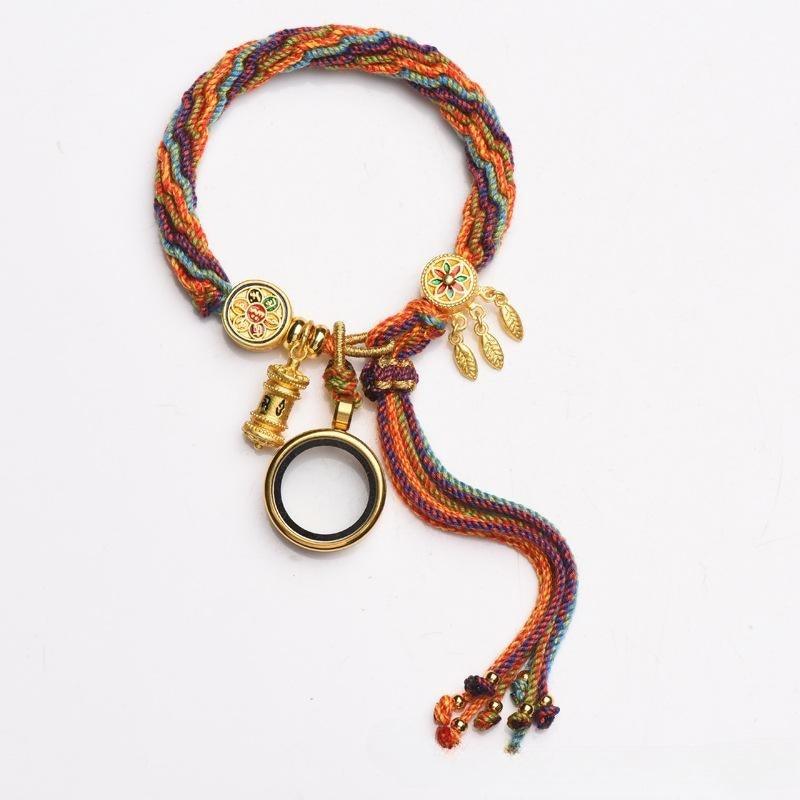
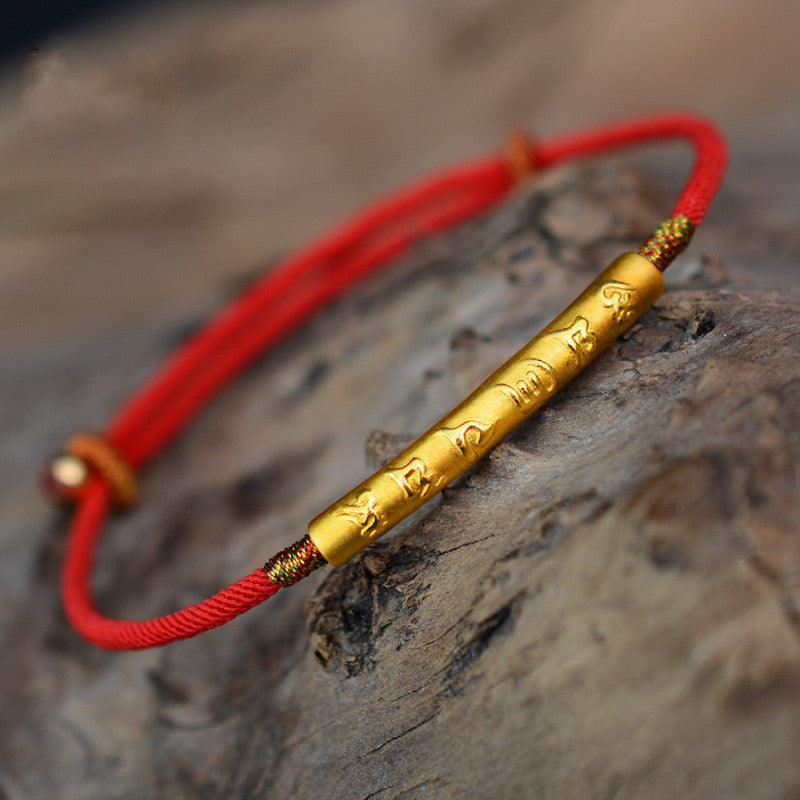
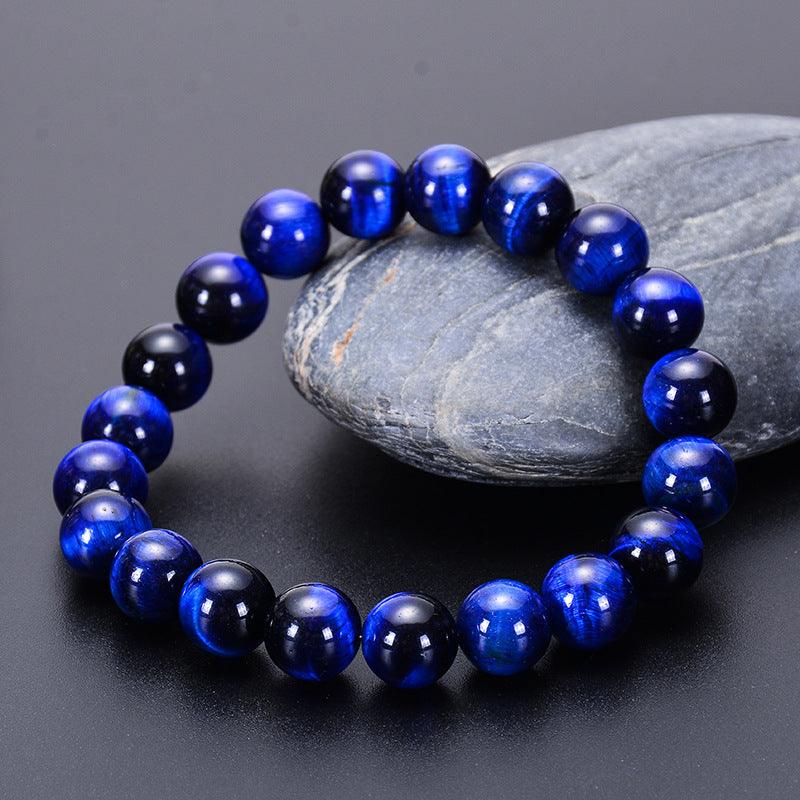
Quick answer: A red string bracelet in Buddhist and Tibetan Buddhist contexts is commonly connected with blessing, protection, prayer, and mindful intention. In Tibetan Buddhist ceremonial settings, red protection ribbons or cords can be given in connection with prayers and blessings, but not every red bracelet has the same ritual origin or meaning.
If you are choosing one to wear, start with the symbolism, mantra, materials, and intention of the specific piece. You can also explore our Buddhist red string bracelets for designs centered on mantra, protection, blessing, and daily mindful wear.
What Does a Red String Bracelet Mean in Buddhism?
There is no single meaning that applies to every Buddhist red string bracelet. Depending on the tradition and context, a red cord may be associated with blessing, protection, prayer, auspicious wishes, or remembrance of spiritual practice.
One documented Tibetan Buddhist example comes from long-life prayers held for His Holiness the Dalai Lama in Dharamsala in 2023, where participants were given a red protection ribbon. This illustrates why red cords can carry protection and blessing symbolism in Tibetan Buddhist settings. It does not mean that every commercially sold red string bracelet is the same kind of ceremonial protection cord.
Why Protection, Blessing, and Mindful Intention Are Often Connected
For many wearers, the bracelet is meaningful because it keeps an intention close at hand. A cord received in a religious setting may be tied to a specific prayer or blessing. A bracelet worn in everyday life may instead serve as a reminder to return to compassion, patience, prayer, or mindful conduct.
At Buddhist Temple Shop, every product is ceremonially blessed before dispatch. We describe protection and blessing as spiritual and cultural symbolism rather than as guaranteed outcomes.
What Does Om Mani Padme Hum Add to a Red String Bracelet?
Om Mani Padme Hum is the six-syllable mantra associated with Avalokiteshvara (Chenrezig), the bodhisattva of compassion. During an Avalokiteshvara empowerment in Ladakh, His Holiness the Dalai Lama described Avalokiteshvara as the embodiment of compassion and invited participants to recite the six-syllable mantra Om Mani Padme Hum.
On a red string bracelet, the mantra adds a more specific Buddhist meaning: the bracelet can become a wearable reminder of compassion, prayer, and mindful awareness rather than simply a red accessory. See our Om Mani Padme Hum red string bracelet or browse the full red string bracelet collection.
Do Buddhist String Bracelet Colors Have Fixed Meanings?
No universal Buddhist color chart assigns one fixed bracelet meaning to every color. Buddhist traditions are diverse, and color can carry different ritual, artistic, or cultural associations depending on lineage and context. For bracelets, the meaning should be read from the complete piece: its cord, mantra, symbol, beads, blessing context, and intended use.
Red is especially relevant here because protection ribbons and cords are documented in Tibetan Buddhist ceremonial settings. Other bracelet colors should not automatically be given invented meanings such as “this color always brings wealth” or “that color always prevents illness” unless the specific tradition and source support that claim.
Which Wrist Should You Wear a Red String Bracelet On?
There is no universal Buddhist rule requiring every red string bracelet to be worn on only the left or only the right wrist. Practice can vary by teacher, lineage, family custom, and the reason the cord was given.
If a teacher or religious community gave you the cord with instructions, follow those instructions. For an everyday Buddhist-inspired bracelet without a specific ritual instruction, choose the wrist that is comfortable and respectful. For a fuller explanation, read Which Wrist Should You Wear a Red String Bracelet On?
Does a Red String Bracelet Have to Be Blessed?
No. A red bracelet can still have personal, cultural, or symbolic meaning without having been blessed. A blessing adds a religious or ceremonial context, but it should not be assumed simply because a bracelet is red.
When a seller states that a bracelet is blessed, that should be a real part of the product or brand process. At Buddhist Temple Shop, blessing before dispatch is part of our stated practice across the store.
Can Anyone Wear a Buddhist Red String Bracelet?
You do not need to be Buddhist to wear a red string bracelet respectfully. The important distinction is between appreciation and invention: learn what the symbols or mantra on your bracelet mean, avoid treating sacred imagery as a novelty, and do not claim a ritual origin that the piece does not have.
If your bracelet carries a Buddhist mantra such as Om Mani Padme Hum, understanding its connection with compassion makes the design more meaningful than wearing it only as decoration.
How to Choose a Red String Bracelet
-
Meaning: decide whether you are drawn to blessing, protection symbolism, compassion, prayer, or mindful intention.
-
Mantra or symbol: look for a design whose Buddhist meaning you understand, such as Om Mani Padme Hum.
-
Materials: check the cord, metal, bead, stone, and finish rather than relying on color alone.
-
Fit: confirm whether the bracelet is adjustable or has a fixed circumference.
-
Use: choose a piece suitable for daily wear, prayer, meditation, or gifting according to the product details.
Red String Bracelet Meaning: The Most Useful Way to Read It
The most accurate way to understand a red string bracelet is to look at three layers together: the tradition it refers to, the symbols or mantra it carries, and the intention with which it is worn. Red can carry protection and blessing associations in Tibetan Buddhist contexts, while a mantra such as Om Mani Padme Hum adds a specific connection with compassion and prayer.
To compare designs, browse our Buddhist red string bracelets. For the broader cultural context, see our Tibetan bracelets and guide to Tibetan bracelet meaning.
FAQ
What does a red string bracelet mean in Buddhism?
It can symbolize blessing, protection, prayer, auspicious wishes, or mindful intention, depending on the Buddhist tradition and the context in which the cord or bracelet is used.
What does a Tibetan red string bracelet mean?
In Tibetan Buddhist contexts, red protection cords or ribbons can be connected with ceremonies, prayers, and blessings. A commercial bracelet should not automatically be described as a ritual protection cord unless its actual source and practice support that claim.
Is Om Mani Padme Hum a protection mantra?
Om Mani Padme Hum is the six-syllable mantra associated with Avalokiteshvara (Chenrezig), the bodhisattva of compassion. On jewelry, it is best understood through its connection with compassion and Buddhist practice rather than as a promise of a guaranteed result.
Do Buddhist bracelet colors have fixed meanings?
No single color code applies to all Buddhist bracelets. Meanings vary by tradition, object, ritual context, and design, so color alone should not be used to assign a fixed spiritual effect.
Which wrist should a red string bracelet go on?
There is no universal Buddhist left-wrist or right-wrist rule. Follow any instructions given with a ceremonial cord; otherwise, choose the wrist that is comfortable and appropriate for the specific bracelet.
Can non-Buddhists wear a red string bracelet?
Yes, provided it is worn respectfully. If the bracelet includes a Buddhist mantra or sacred symbol, learning its meaning is a good way to avoid reducing it to decoration.